
You’ve seen the ads. Work from anywhere, make money while you sleep, turn a laptop into a paycheck.
What they skip is the part in the middle, the weeks between signing up and getting paid. That’s where most people quit.
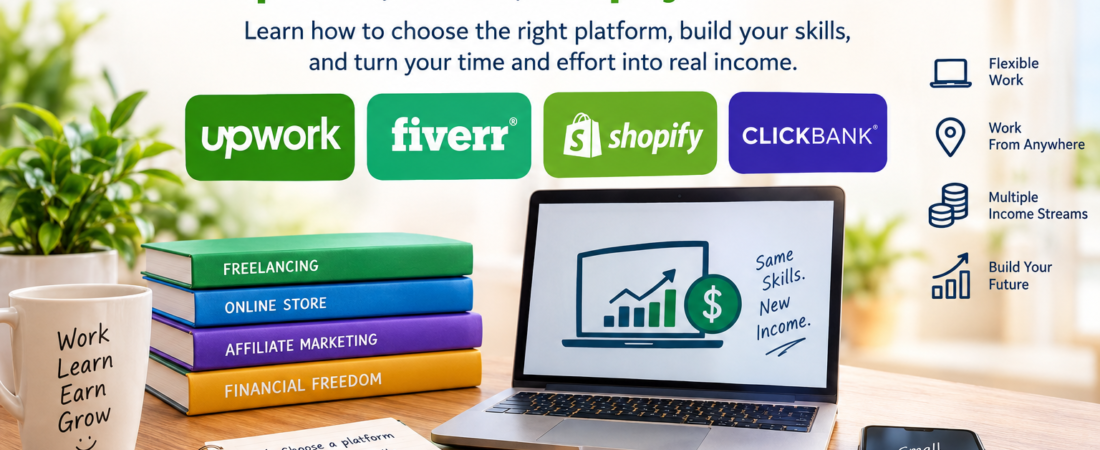
Making money online is possible, but these four platforms ask very different things of you. Upwork and Fiverr are about selling a skill. Shopify is about running a store. ClickBank is about earning commissions by recommending other people’s products. Once you know how each one works, it’s much easier to pick the one that fits your skills, your budget, and the hours you actually have.
Which One Is Right for You?
Don’t open four accounts today. First, figure out what you actually have to offer.
| Platform | How You Earn | What You Need to Start | Biggest Hurdle |
|---|---|---|---|
| Upwork | Doing freelance projects for clients | A useful skill and a few work samples | Landing the right projects |
| Fiverr | Selling clearly defined services | One specific service with set pricing | Standing out and getting noticed |
| Shopify | Selling products from your own store | A product, some budget, and a sales plan | Finding customers without losing money |
| ClickBank | Commissions on sales you refer | Helpful content and a way to reach buyers | Earning trust and finding the right traffic |
If people already pay for something you can do, freelancing is probably the easiest way in. If you’ve got a product idea or an audience, a store or affiliate site might be worth a look.
Pick one and stick with it long enough to learn it before you add another.
1. Upwork: Get Paid to Solve Problems
Upwork puts freelancers in front of clients who need help. You build a profile, browse jobs, and talk through the details with a client before anything is signed. Here’s Upwork’s guide to getting started.
The trick is describing what you do in words a client understands right away. “Virtual assistant” is vague. “I sort customer inquiries and keep your weekly sales spreadsheet up to date” tells someone exactly why they’d hire you.
Pick Something You Can Do Well
Some common starting points:
- Writing articles or product descriptions
- Editing short videos
- Designing presentation slides
- Cleaning up spreadsheets
- Updating website content
- Handling admin tasks
Stick to work you can finish accurately and on time. Even simple-sounding jobs take good communication and a careful eye.
Build a Small, Honest Portfolio
You don’t have to fake client experience. Make two or three samples that look like the work you want. A writer can draft a sample blog post, a designer can mock up a menu for an imaginary restaurant, and a spreadsheet person can build an inventory tracker. Just label them as samples. They’re there to show what you can do.
Write Proposals About the Client’s Project
A good proposal explains how you’d handle their job. If they need product descriptions, say how you’d keep the tone consistent, what information you’d need from them, and when you could deliver. Attach a relevant sample.
Don’t paste the same long intro into every application. Busy clients skim, and a short, thoughtful reply is easier to say yes to.
Know the Costs
Upwork currently lists freelancer service fees from 0% to 15%, depending on the contract. Check the fee on the specific job, and account for any proposal-related costs before you apply to a lot of listings. See Upwork’s current freelancer info.
Your first goal: win one small project that you can finish confidently and professionally.
2. Fiverr: Turn a Skill Into a Simple Package
On Fiverr you list services as “Gigs.” Buyers look over your offer and either order or message you with questions. Here’s how Fiverr works for freelancers.
Your listing should make buying feel easy.
Get Specific
Compare “I will do graphic design” with “I will design three social media graphics for your bakery.” The second one tells the buyer what they get, and it forces you to define the work too.
Other focused ideas:
- Editing one short video with captions
- Proofreading a 1,000-word article
- Formatting a ten-slide presentation
- Writing five product descriptions
- Making a printable weekly planner
Spell Out What’s Included
List the deliverables, the turnaround time, how many revisions you’ll do, and what the buyer needs to send you. Clear limits keep a small order from quietly turning into three days of extra work. If you sell add-ons, say what they cost and how they change the delivery date.
Price for the Whole Job
Count the messages, prep, revisions, and delivery, not just the main task.
Fiverr currently credits freelancers with 80% of the purchase amount, including extras and tips. So a $50 order means $40 in platform earnings, before taxes and any other costs. Check Fiverr’s earnings guidance. If your prices are very low and every order takes longer than you planned, that gets hard to sustain fast.
Your first goal: build one focused Gig with strong samples and a scope you can handle reliably.
3. Shopify: Build a Store Around Something People Want
Shopify gives you the tools to build and run an online store. But the website is only one piece. You also need products, pricing, customer support, and a way to get people through the door. Read Shopify’s store setup guide.
A beautiful store won’t create demand on its own.
Start With the Customer
Before you pick a theme or design a logo, answer three questions:
- Who is this for?
- What need or preference does it meet?
- Why would they buy it from you?
“Stationery” is too broad. “Printable study planners for university students” gives you a real audience and a clear product.
Talk to potential buyers, look at what competitors offer, and test interest before you spend serious money.
Choose a Model You Can Manage
You could sell things you make, inventory you source, print-on-demand items, or digital downloads. Each comes with its own headaches. Physical products mean shipping and fulfillment. Digital products need clear instructions and support. Even if a supplier ships for you, the customer is still yours to look after.
Go with the model whose costs and daily work you actually understand.
Do the Profit Math Before You Promote
Say a product sells for $30 and costs you $12. That leaves $18, and that $18 still has to cover everything else. Depending on your setup, that could include:
- Packaging and shipping
- Payment processing fees
- Store subscription and apps
- Advertising
- Returns and refunds
Shopify’s costs depend on your plan and setup, so check current pricing when you make your budget. Here’s Shopify’s ecommerce cost guide.
Decide How People Will Find You
Choose a marketing channel that fits the product. Demo videos work well for something visual. Search-friendly articles can help if people are looking for a solution to a specific problem. Start with a small budget and track whether each sale actually leaves you with a profit.
Your first goal: test a small range of products and learn what one order really earns you.
4. ClickBank: Earn Commissions by Recommending Things Honestly
ClickBank is an affiliate marketplace. You pick products to promote, share your tracking links, and may earn a commission when a qualifying purchase is credited to you. See ClickBank’s getting-started guidance for affiliates.
You don’t have to make the product. You do need a believable reason for people to trust your recommendation.
Pick an Audience You Understand
Choose a topic you can talk about accurately and usefully. Think about what people ask, what they struggle with, and what they want to know before they buy. That gives your content a purpose beyond holding an affiliate link.
Vet Products Carefully
A big commission isn’t a good enough reason to promote something. Look closely at the product, the seller, the sales page, the refund terms, and whether it truly suits your audience. If you can, try it yourself.
And if you haven’t used it, say so. Don’t pass off a summary of the sales page as a personal review.
Make Content That Helps People Decide
Tutorials, comparisons, demos, and honest breakdowns of who a product is (and isn’t) good for all work well. Talk about the downsides as well as the benefits. A reader should walk away knowing more, whether they buy or not.
Disclose the Relationship
Put a clear disclosure where readers will see it next to your recommendation. Something like: “If you buy through links in this article, I may earn a commission.”
Follow whatever disclosure rules apply to your audience and the channel you publish on. ClickBank also notes that refunds and chargebacks can reduce commissions, so a recorded sale isn’t guaranteed income. Read ClickBank’s affiliate disclosure guidance.
Your first goal: publish genuinely helpful content around one offer you’ve researched well, then see how your audience reacts.
So How Much Can a Beginner Make?
Nobody can give you a number that holds for everyone.
You may earn nothing at first while you build your skills, put together samples, test an offer, or grow an audience. Results depend on demand, pricing, quality, time, and costs.
What matters is what you keep, not what comes in. With freelancing, compare your earnings to every hour you put in. With a store, look at profit after product and operating costs. With affiliate work, factor in promotion expenses and commission adjustments.
A small project that turns a profit will teach you more about building something sustainable than a big revenue figure that leaves you with nothing.
A Simple 30-Day Plan
Week 1: Pick a Direction
Look honestly at your skills, time, and budget. Choose one platform and one specific service, product, or audience. Also check that your country is eligible for accounts and payouts before you put in real effort.
Week 2: Build the Basics
Put together portfolio samples, a focused Fiverr listing, a small product offer, or your first useful affiliate article. Keep it small. You just need something credible to test.
Week 3: Get in Front of People
Send relevant proposals, share your service where it fits, test interest in your product, or publish content where your audience already looks for answers. Pay attention to the questions and objections you hear, because they show what your offer is missing.
Week 4: Look at What Happened
Ask yourself:
- Are the right clients responding?
- Do people understand what you’re offering?
- Are visitors turning into customers?
- How much time and money have you spent?
- What would you change next time?
Thirty days is for learning, not an income deadline.
Common Questions
Which Platform Works Best on a Small Budget?
Upwork or Fiverr, if you already have a skill people want and the equipment to deliver it. Shopify usually needs an operating budget. Affiliate marketing can start cheap, but making content and finding an audience takes time.
Can I Use More Than One Platform?
Yes, but only take on what you can handle. It’s easier to see what works when your effort isn’t spread thin.
Do I Need Professional Experience?
You need enough skill to deliver what you promise. Honest samples can show that before you have a client history.
Is This Passive Income?
Freelancing is active work, start to finish. Stores and affiliate content can sometimes make sales while you’re away, but they still need upkeep, support, updates, and promotion.
Start With One Useful Thing
You don’t need four income streams by next week.
Begin with one clear offer: a service you can deliver, a product someone needs, or information that helps people make a good decision. Choose the platform that fits it, learn the costs, and let real feedback shape what you do next.
Your first milestone is simple. Deliver something valuable, and find out whether you can do it profitably.